Celebrations for Successful Work
Celebrations for Successful Work The successful completion of work is a reason for congratulations and acknowledgment.

Celebrations for Successful Work The successful completion of work is a reason for congratulations and acknowledgment.
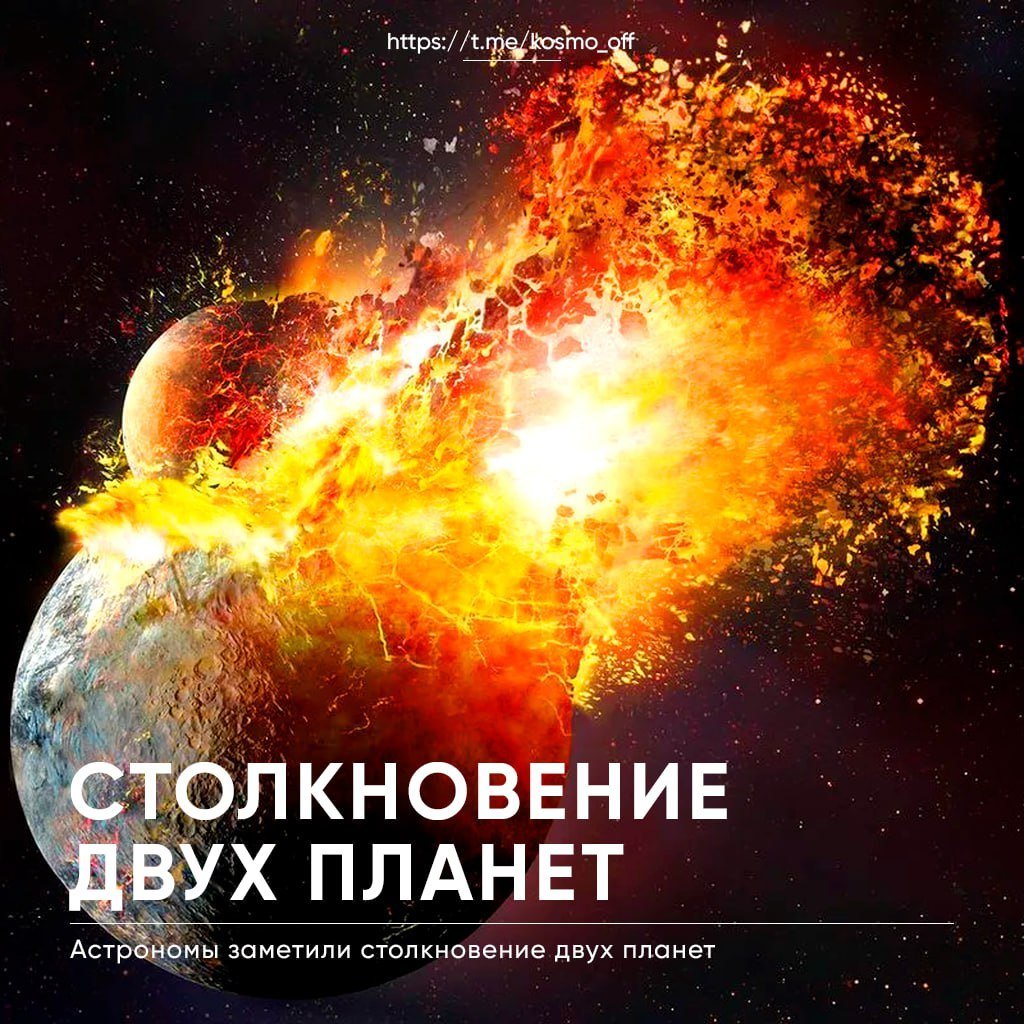
Astronomers Have Observed the Collision of Two Planets Studying the archival data of the star system Gaia20ehk, located 11,000 light-years away from us, scientists noticed an unusual phenomenon. Between 2016 and 2021, its spectrum behaved extremely strangely: three significant brightness decreases were observed, followed by chaotic jumps. Analysis of these changes indicated that such an effect could have been caused by huge clouds of dust, gas, and rocky debris rotating around the star and scattering its light. Their appearance is linked to a cosmic catastrophe – the collision of two planets. Calculations show that currently, the fragments of the destroyed exoplanets are situated at a distance of about 1 astronomical unit from the parent star. It is believed that our Earth experienced a similar cataclysm approximately 4.5 billion years ago – resulting in the formation of the Moon.
Supermassive Black Hole TON 618 is the largest one found to date. TON 618 is an incredibly massive black hole located in the Canes Venatici constellation. It is estimated to be around 66 billion times the mass of our Sun, making it one of the most massive black holes known to astronomers. Its size and mass are truly staggering, setting a new record for the largest black hole discovered. This discovery sheds light on the extreme scale and power of black holes in the universe, deepening our understanding of these enigmatic cosmic entities.
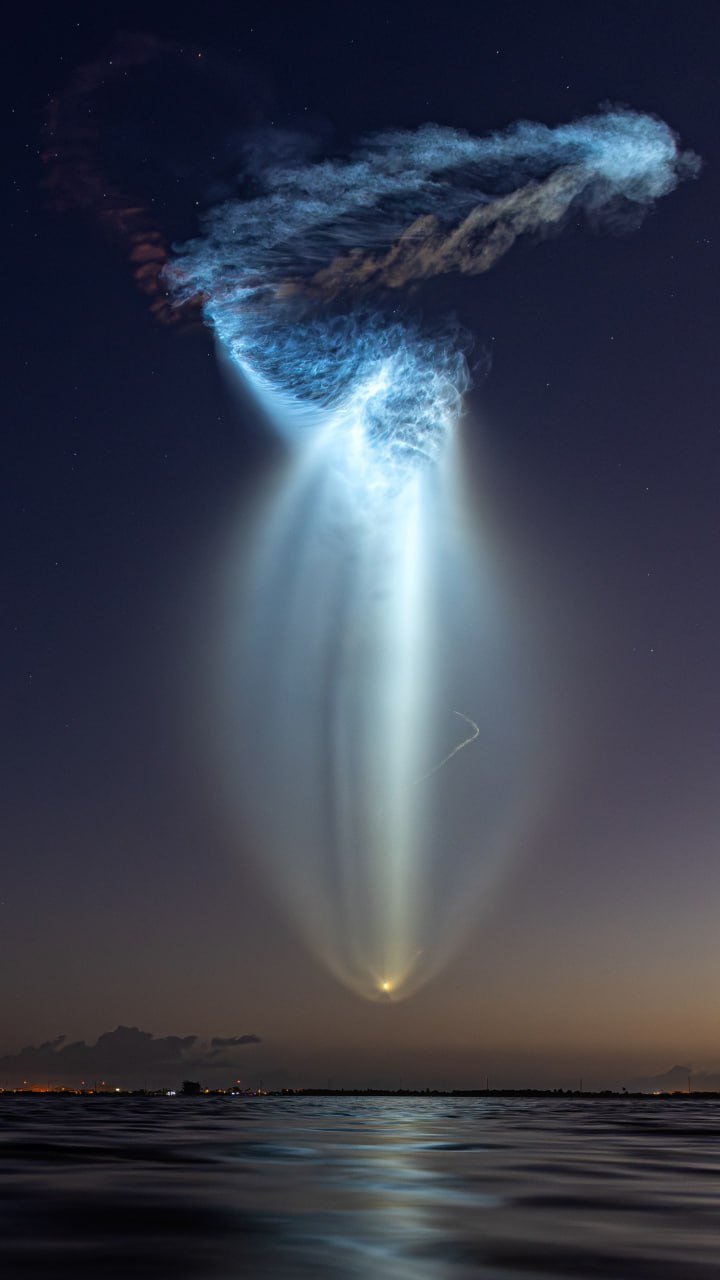
Mysterious "Space Jellyfish" Phenomenon During Rocket Launch The appearance of "space jellyfish" during rocket launches is a known occurrence caused by exhaust gases and condensation trails left behind as the rocket ascends. Typically seen during the launch of rockets like Falcon 9, the trails consist mainly of water vapor and carbon dioxide. The visibility of this phenomenon depends on specific conditions, such as the timing of the launch in relation to sunrise or sunset. In the captured image, the rocket trail appears to curve downward, but in reality, it follows the Earth's curvature as it ascends vertically to reach orbit with the necessary horizontal speed, not just altitude. Despite the scientific explanation, conspiracy theorists often misinterpret this maneuver to support their claims that rockets do not travel into space.
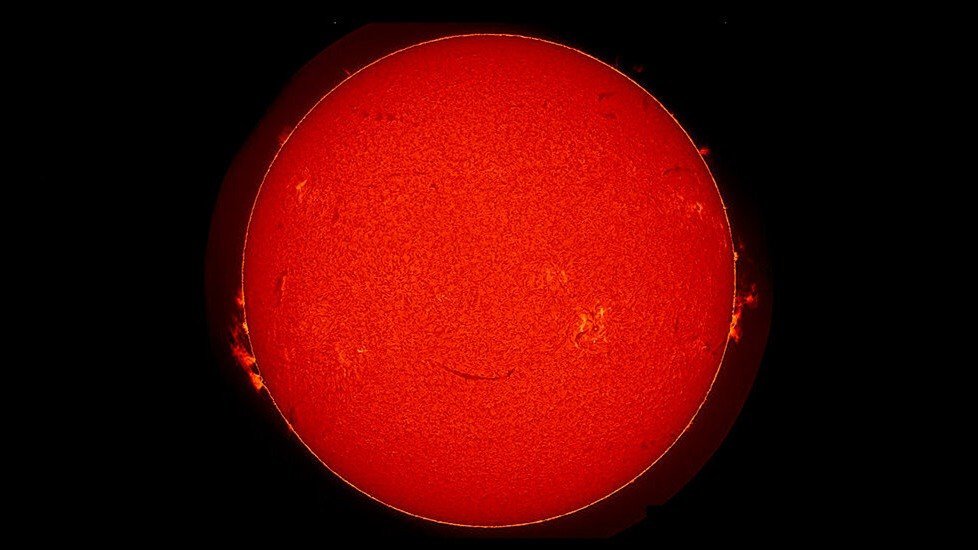
Most Powerful Magnetic Storm in the Last Two Months Has Ended Over the weekend, Earth experienced a level G3 magnetic storm caused by a plasma cloud ejected by the Sun the previous week. Experts anticipate a complete return to normal conditions by Tuesday.
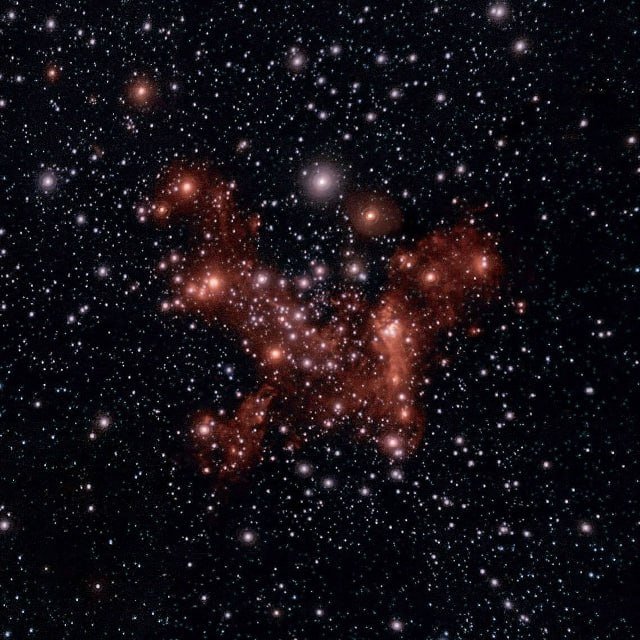
Galaxy's 'Heart' Found Astronomers using the Very Large Telescope (VLT) discovered a massive gas cloud swirling around the supermassive black hole, Sagittarius A*, at the center of the Milky Way. The center of our galaxy, hidden behind cosmic dust layers, houses the Arches Cluster, the most densely populated area in our stellar system. Stars in this region are packed millions of times denser than those near our Sun, creating a night sky brighter than a full Moon if we were to live there. The red hue in the image is not a filter but a result of dust absorbing blue light, leaving only infrared and red rays visible. Although the black hole itself remains unseen, its immense gravitational pull causes the entire cluster of stars to rotate at tremendous speeds.
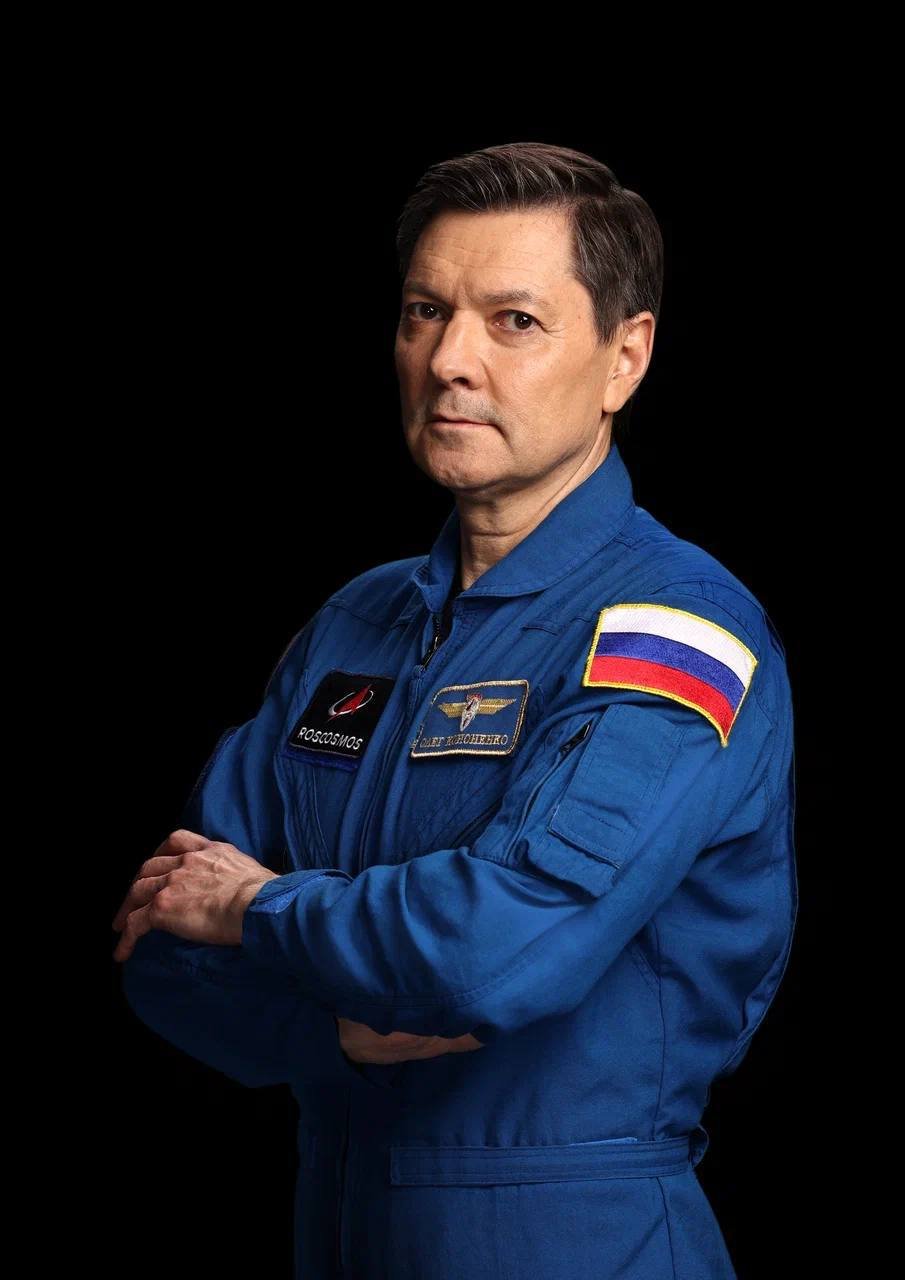
Oleg Kononenko appointed as the Head of the Cosmonaut Training Center Oleg Kononenko, a cosmonaut and Hero of Russia, known for leading the cosmonaut team, has been named the new head of the Cosmonaut Training Center. Roscosmos is currently focused on various tasks, including preparing cosmonauts for missions on the Russian Orbital Station. According to Dmitry Bakanov, the head of Roscosmos, he is confident that Oleg Kononenko's extensive experience as a cosmonaut and leader will bring about the needed results. Oleg Kononenko has an impressive resume, with 5 space flights, 7 spacewalks, and a total of 1,111 days spent in orbit — a remarkable record in human space exploration.
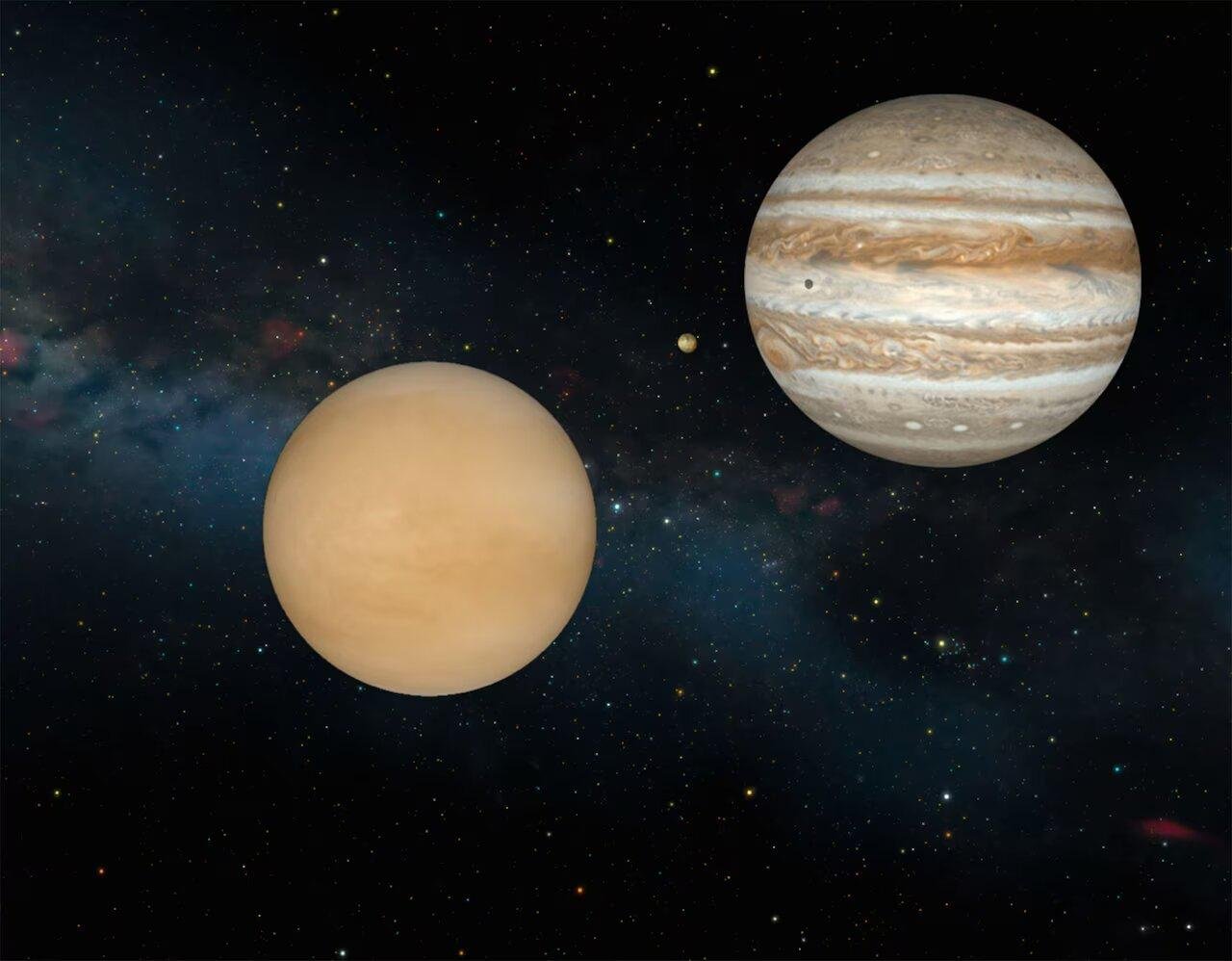
Which planets to watch for in the April sky Astronomers advise not to miss the opportunity to observe Jupiter and Venus. April marks the final month of the season to marvel at the gas giant and its four moons. However, the "sister of Earth" will remain visible in the night sky until June.
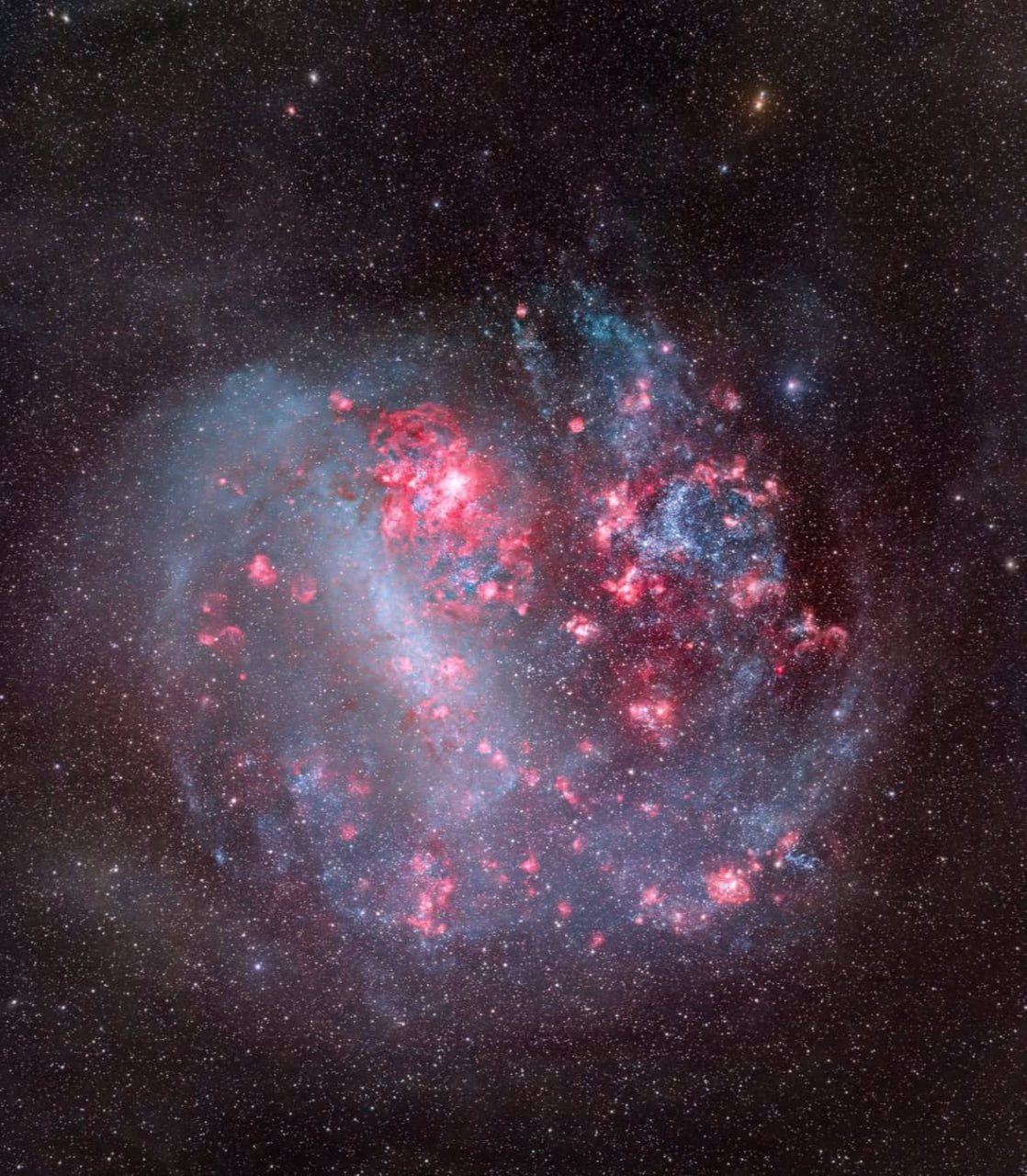
A Glimpse into the Large Magellanic Cloud! The Large Magellanic Cloud, a celestial object not visible from Russian territory, can only be observed in the Southern Hemisphere. Mainly situated in the Dorado constellation, a small portion of the Large Magellanic Cloud is also found in the Mensa constellation. Interestingly, the distance from Earth to the Large Magellanic Cloud is approximately 163,000 light-years.
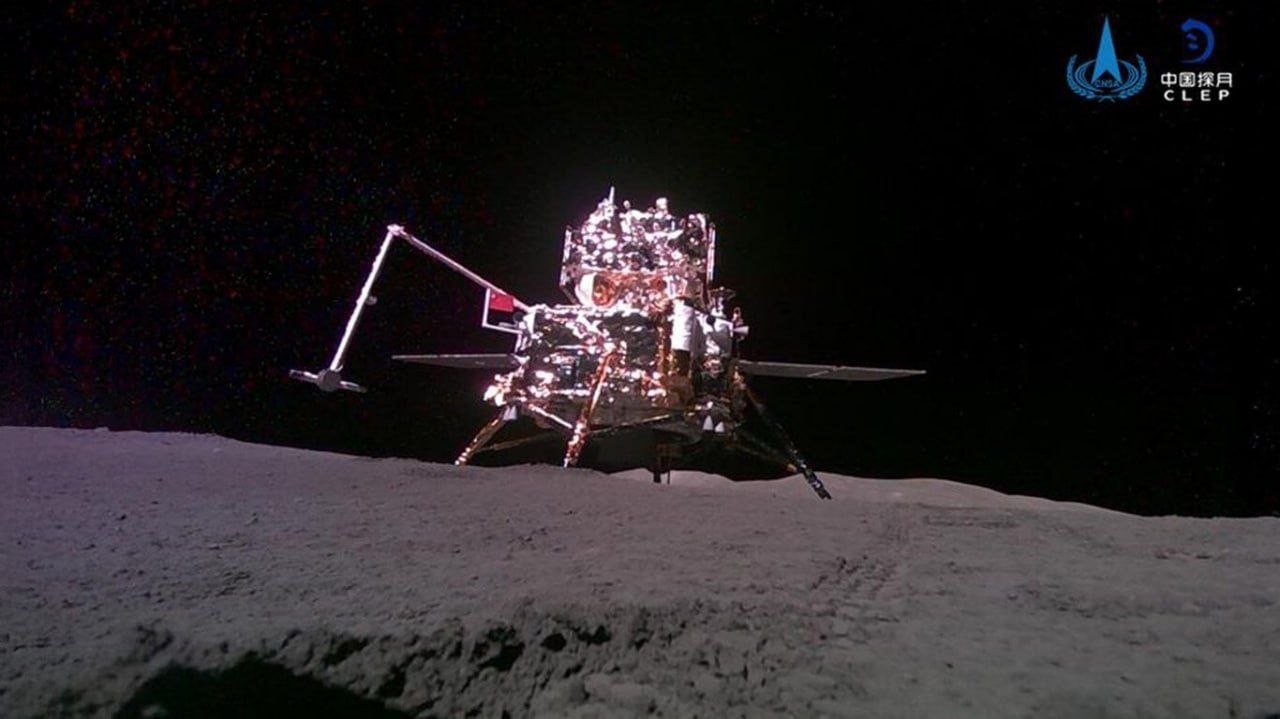
Moon and Arch in Utah, USA. In the vast desert landscape of Utah, USA, lies the stunning Moon and Arch rock formation. This natural wonder captivates visitors with its unique shape and picturesque surroundings. The Moon and Arch is a popular destination for hikers and nature enthusiasts seeking to witness the beauty of the American Southwest. The geological formation of the Moon and Arch took millions of years to create, shaped by the forces of wind and water. The arch stands as a testament to the power of nature and the intricate beauty that can be found in the most unexpected places. Visitors can marvel at the natural artwork while immersing themselves in the tranquility of the desert environment.