Analytics

Migration Balance Between Italy and European Countries

Migration Balance Between Italy and European Countries The migration patterns between Italy and various European countries reveal significant trends. Italy attracts the most migrants from Romania, with a migration balance of +1.277 million people from 2002 to 2024. Following Romania, Albania and Ukraine contribute to Italy's population growth, with 499 thousand and 365 thousand people, respectively. Other countries that significantly contribute to Italy's population through migration include Moldova, Poland, Russia (with 72 thousand more Russians moving to Italy than Italians to Russia), Bulgaria, and North Macedonia. On the other hand, Italians tend to emigrate to the United Kingdom (192 thousand people), Germany (110 thousand), France (98 thousand), and even Northern European countries like Spain.

Life expectancy is generally higher in northern regions, with exceptions in extreme north areas. Surprisingly, despite being wealthier, residing in Canada typically results in a longer lifespan, if not a better quality of life.

Life expectancy is generally higher in northern regions, with exceptions in extreme north areas. Surprisingly, despite being wealthier, residing in Canada typically results in a longer lifespan, if not a better quality of life. **▫ Life Expectancy in the USA and Canadian Provinces** On average, life expectancy is higher the further north you go, excluding extreme northern regions. Despite being wealthier, living in Canada surprisingly means living longer, if not better.


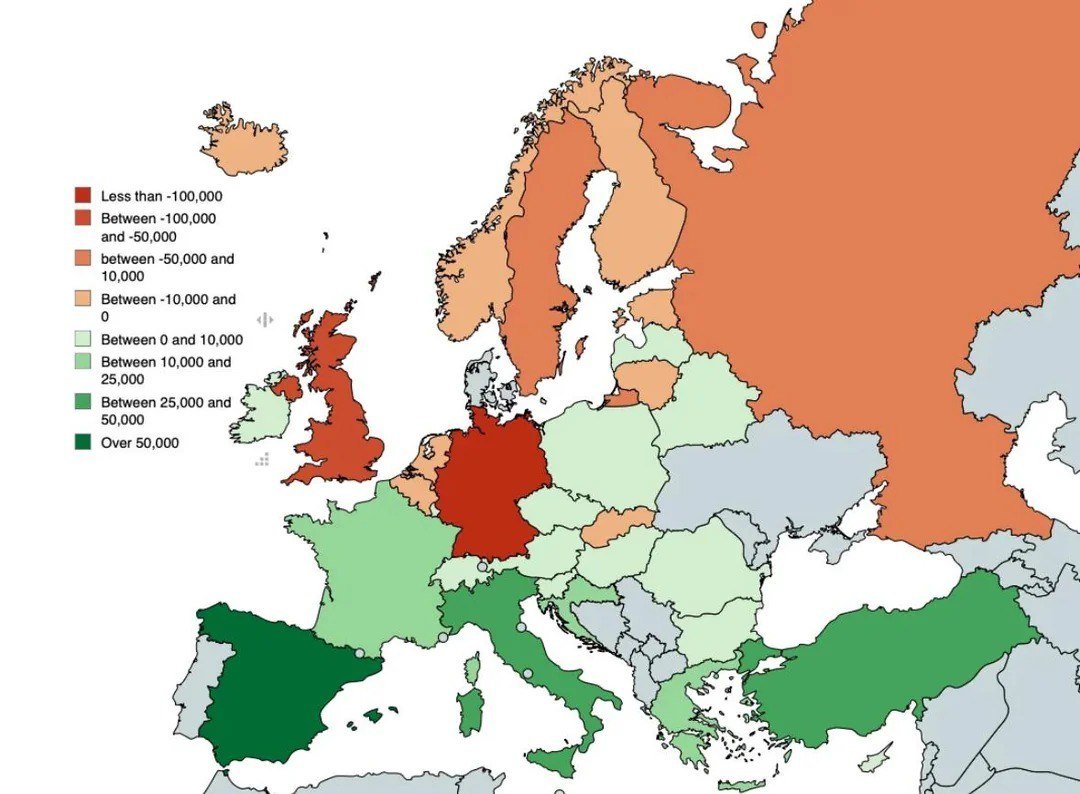
Tourism Balance in European Countries

Tourism Balance in European Countries The tourism balance in European countries signifies the gap between the revenue generated from tourism and the amount spent by residents abroad. Germany leads as the largest tourism spender in Europe, with an annual deficit exceeding -100 billion euros. Following closely is the UK, with a similar deficit just below -100 billion euros, while other countries like France and Sweden range from -10 to -50 in their balances. Conversely, Spain stands out as the top earner from tourism, with an impressive surplus of +50 billion euros each year. Italy and Turkey also rank among the highest earners within the tourism industry on the continent.


Chinese Dominance in Global Electric Vehicle Market

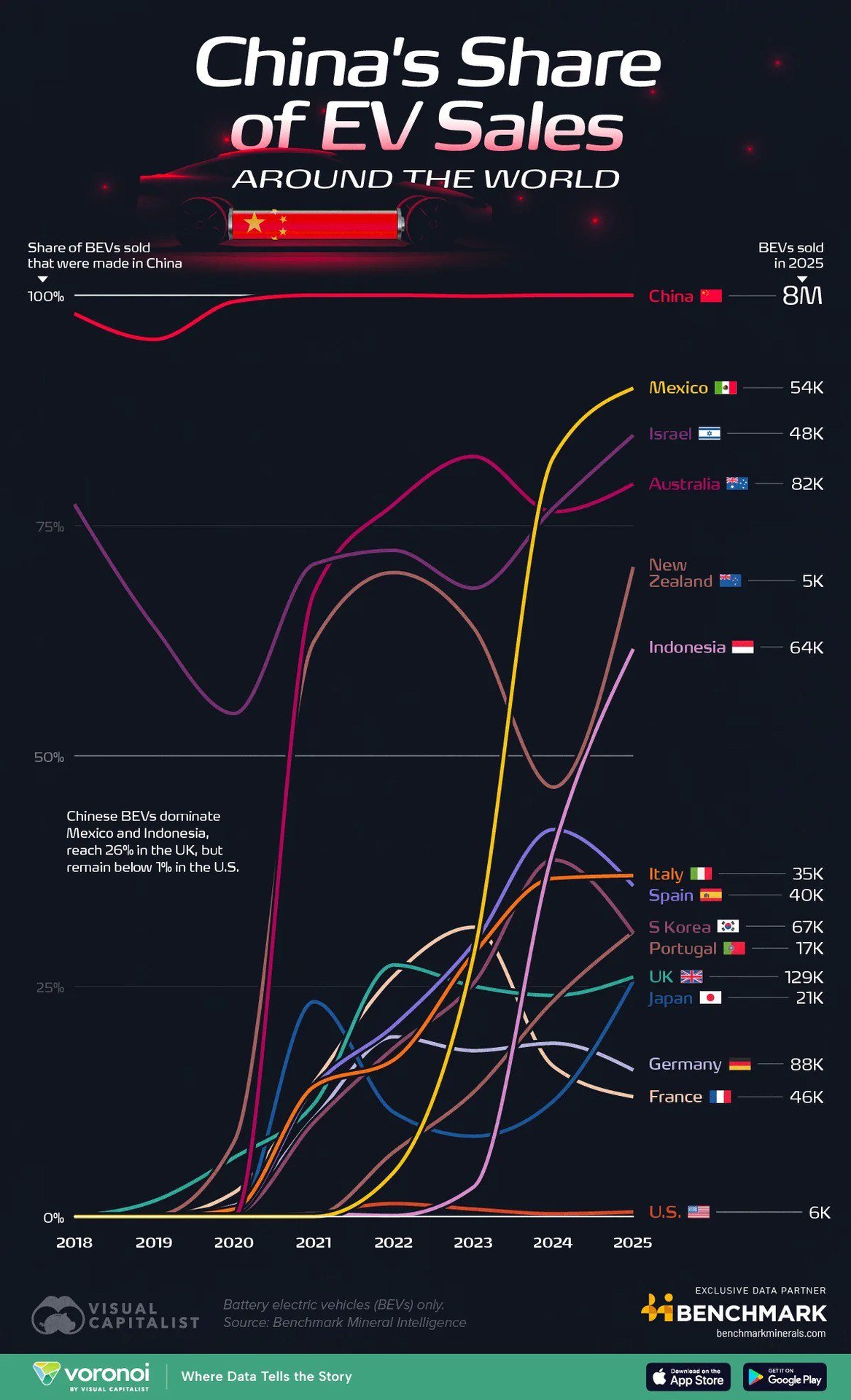
Chinese Dominance in Global Electric Vehicle Market In various countries worldwide, the Chinese automotive industry has established a strong presence in the electric vehicle market. Notably, China holds a complete monopoly in its own market. Beyond its borders, Chinese electric cars dominate in Mexico (90%), Israel (85%), Australia (80%), New Zealand (70%), and Indonesia (62%). Furthermore, China maintains a significant market share of over 10% in European countries, Japan, and South Korea, despite the competitiveness of these markets. Conversely, in the United States, Chinese electric vehicles have a minimal market share, primarily due to tariffs. This rapid expansion has been particularly striking, considering that as recently as 2020, China's market share in Australia was negligible at 0%.


Record Support for Peace Talks in Russia

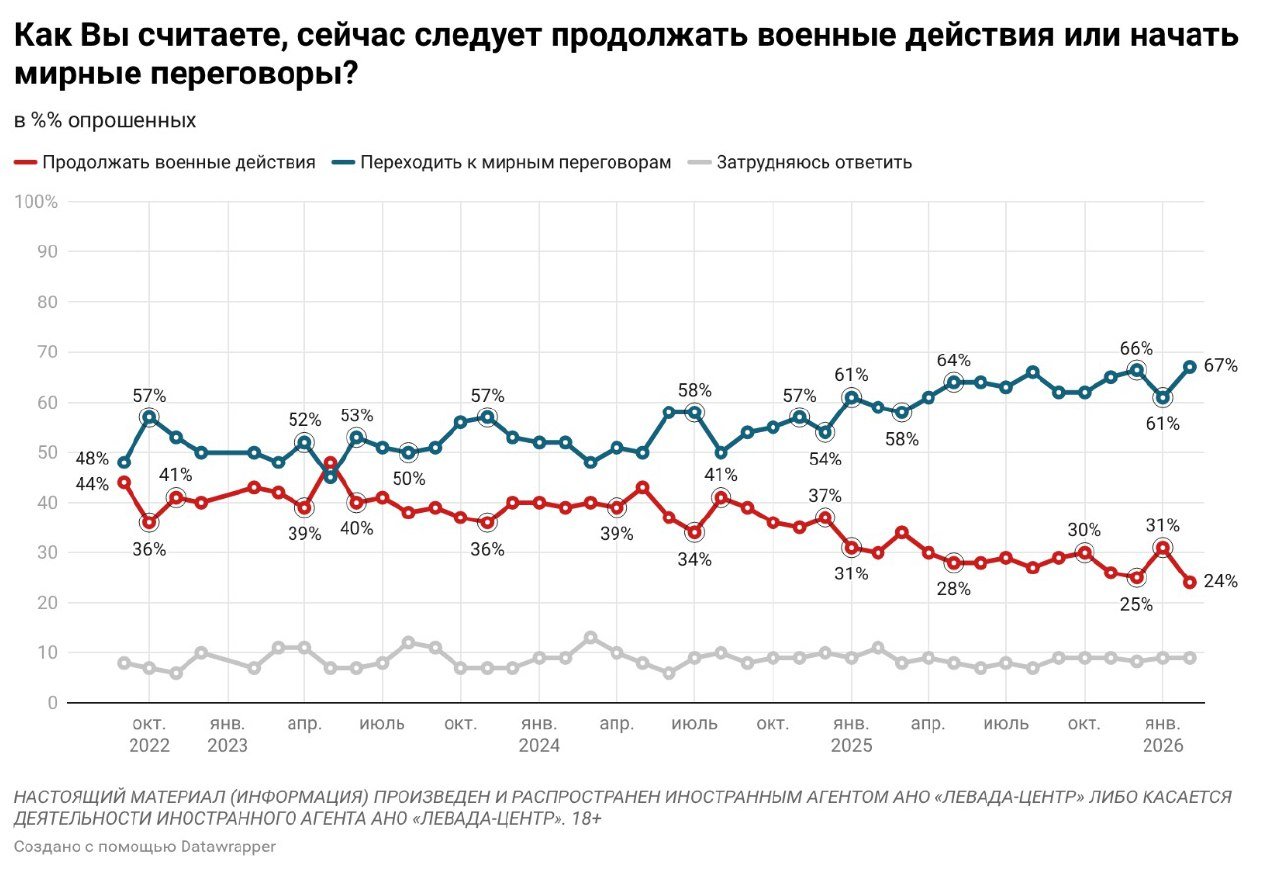
Record Support for Peace Talks in Russia Two-thirds of Russians prefer peaceful negotiations over military operations, with 67% in favor of talks and 24% supporting ongoing military action. These figures mark record levels, with the negotiation supporters hitting an exceptional high (previously 66% in December 2025) and the backers of military operations at a notably low level (previously 25% in December). The data reveals that the highest concentration of support for military action comes from Moscow (42%), the older demographic, and male respondents (31%).


Key events of Winter 2026 according to Russians

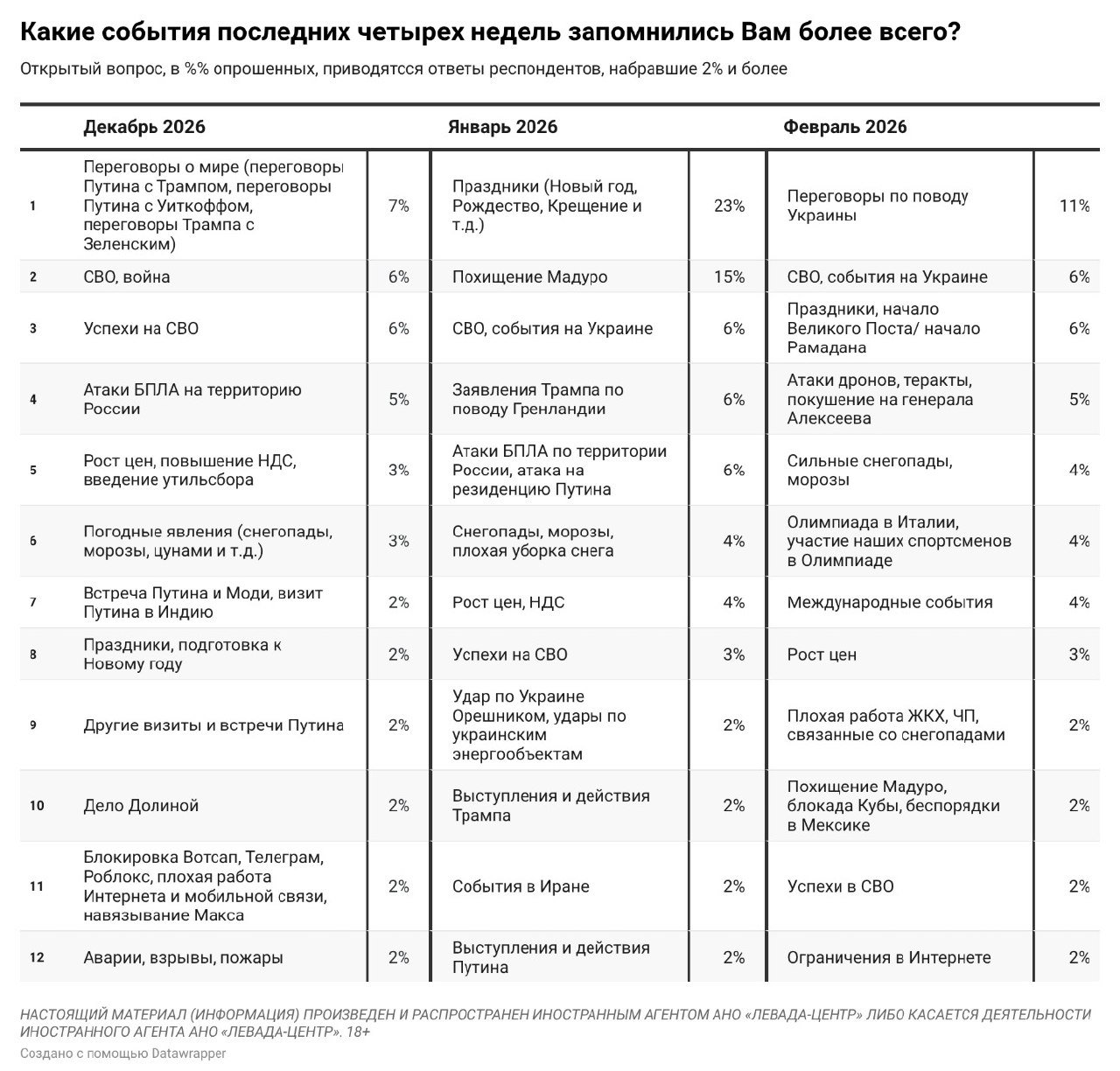
Key events of Winter 2026 according to Russians Negotiations and the Special Military Operation (SMO) were the focal points of Winter 2026. In December and February, these events took center stage, briefly overshadowed by holidays and Maduro in January. Interestingly, negotiations garnered more public interest compared to the SMO.


Majority of Russians Believe in Gender Equality

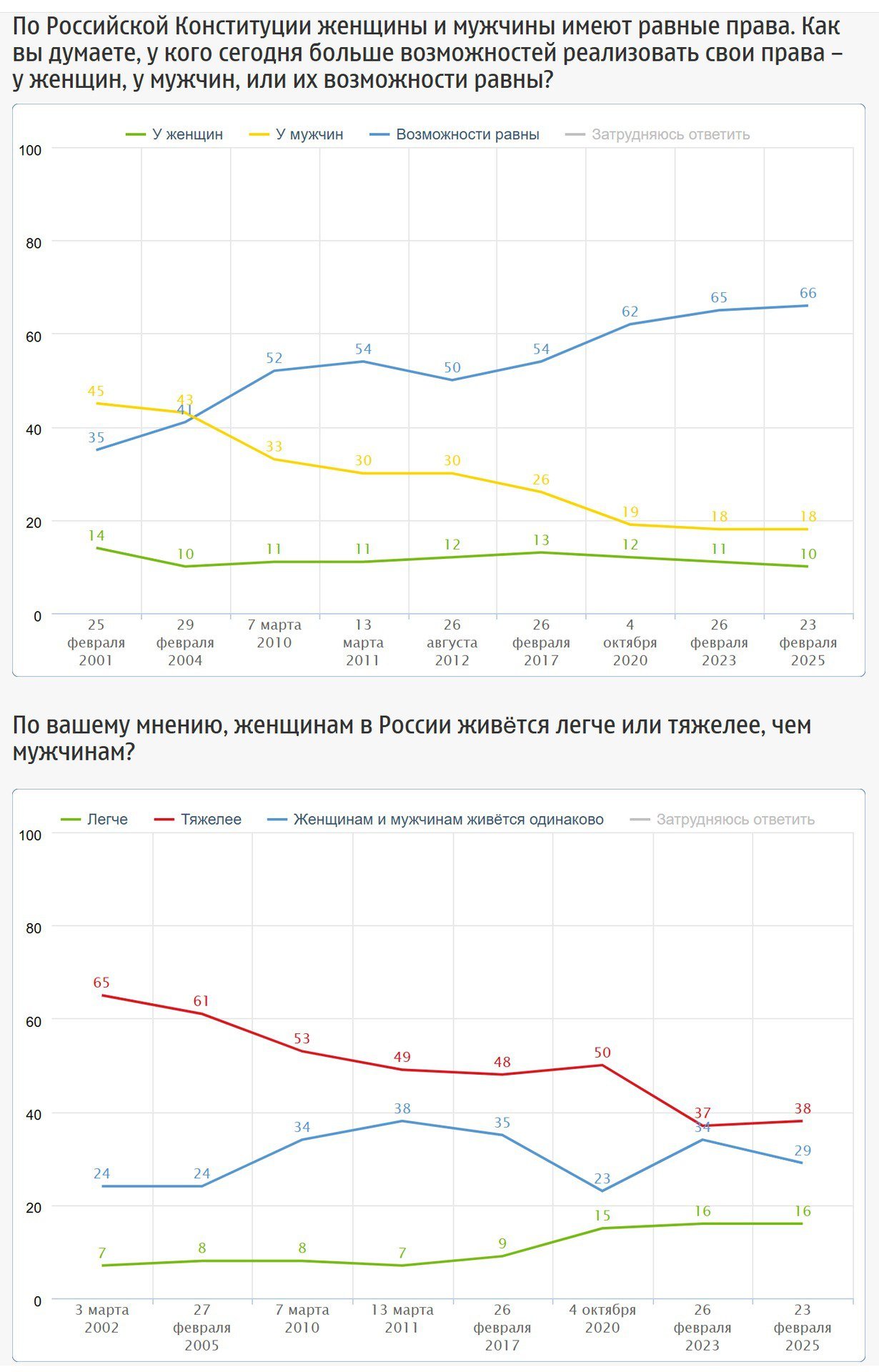
Majority of Russians Believe in Gender Equality According to a recent FOM survey, 66% of Russians believe that both men and women have equal opportunities in the country, marking significant progress from 2001 when only 45% shared this view. Despite this positive shift, 38% of respondents still perceive women as having a harder life due to the balancing act between family, childcare responsibilities, and work. Only 4% believe men face greater challenges as they are responsible for women. The survey highlights perceptions on gender equality, with 29% thinking life is equal for both genders. This data provides insight into societal attitudes on gender roles and challenges faced by individuals in balancing work and family responsibilities. As International Women's Day approaches, it serves as a reminder of the ongoing importance of striving for gender equality.


Singapore's Area Expanded by 20% in 40 Years

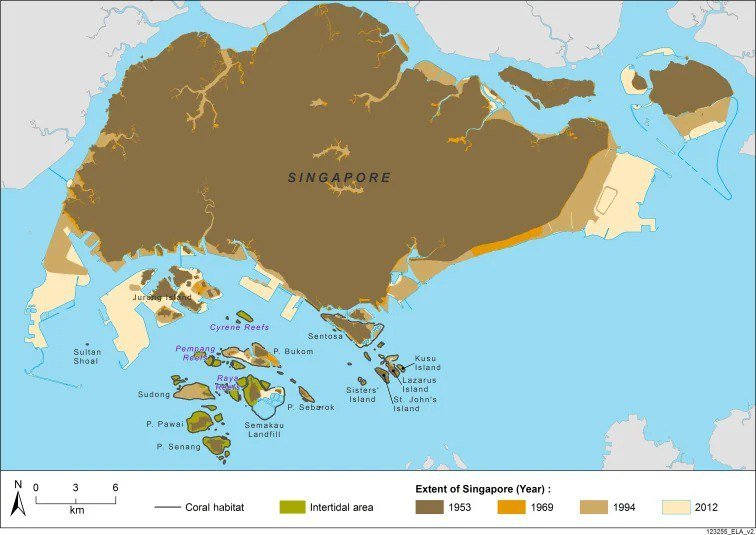
Singapore's Area Expanded by 20% in 40 Years Singapore's area has increased by approximately 20% in the last four decades, with ongoing expansion efforts. Vast amounts of land and sand are being reclaimed, leading to the creation of new territories, significant enlargement of existing islands, and active development and habitation.


Countries with the Largest Number of Supercomputers

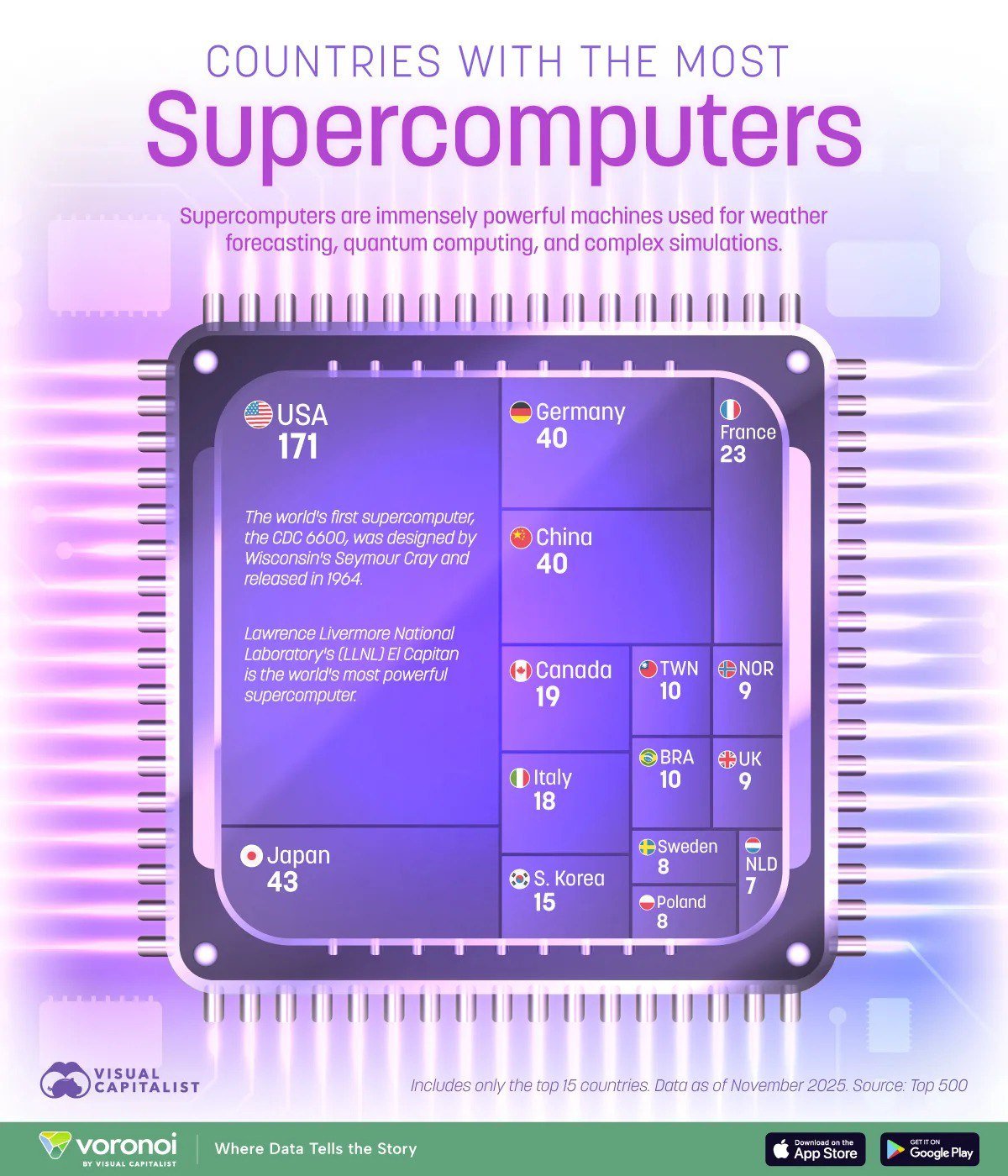
Countries with the Largest Number of Supercomputers Among the top 500 most powerful supercomputers in the world, the US leads with 171 supercomputers. Japan follows with 43, and Germany and China share third place with 40 supercomputers each. In our country, there are 5 computers in the global top 500, similar to Singapore and the UAE. The highest-ranking among them is at 83rd place. For comparison, Poland has 8 supercomputers in the global top 500, with its best-performing one at the 96th position.


Forecasted levels of food inflation in 2026 across different countries worldwide

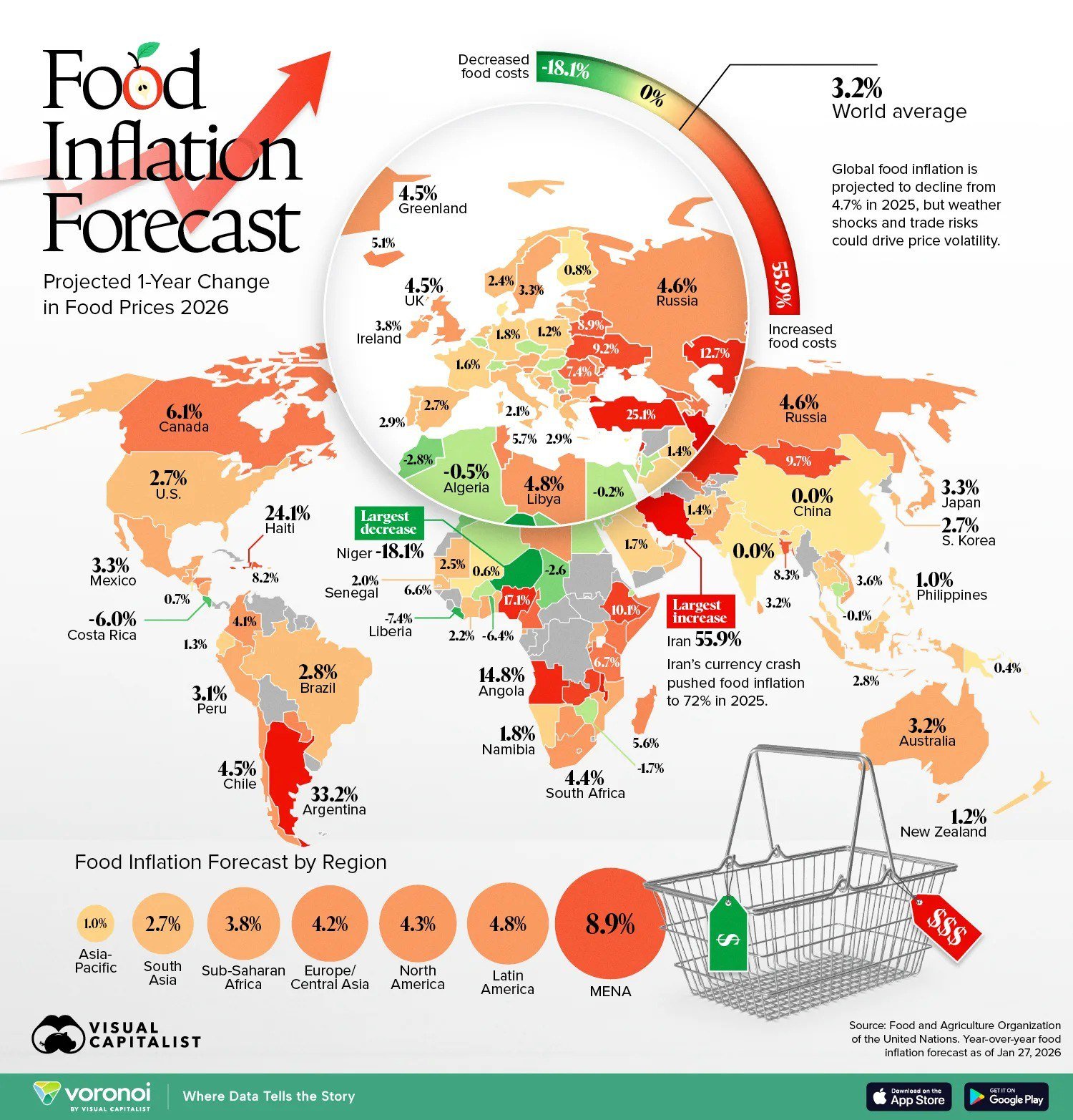
Forecasted levels of food inflation in 2026 across different countries worldwide According to the forecasts by the FAO of the UN, food prices in our country are expected to increase by a modest 4.6% this year. This contrasts with many neighbors like Kazakhstan at 12.7% and even appears favorable compared to certain European countries: +4.5% in the UK and +5.1% in Iceland. The most significant increases in food prices this year are anticipated in Iran (+55.9%), Argentina (+33.2%), and Turkey (+25.1%). Conversely, deflation in food prices is expected in 21 countries, with notable declines in Niger (by 18.1%), Liberia (-7.4%), and Togo (-6.4%). Among European nations, deflation is projected for Hungary (-2.2%), Serbia (-1.5%), Czech Republic (-1.4%), and Switzerland (1.3%). Additionally, in two countries, food prices are forecasted to remain unchanged - India and China.